e-Invoicing for Philippine Businesses: Here's What SME Owners Need to Know
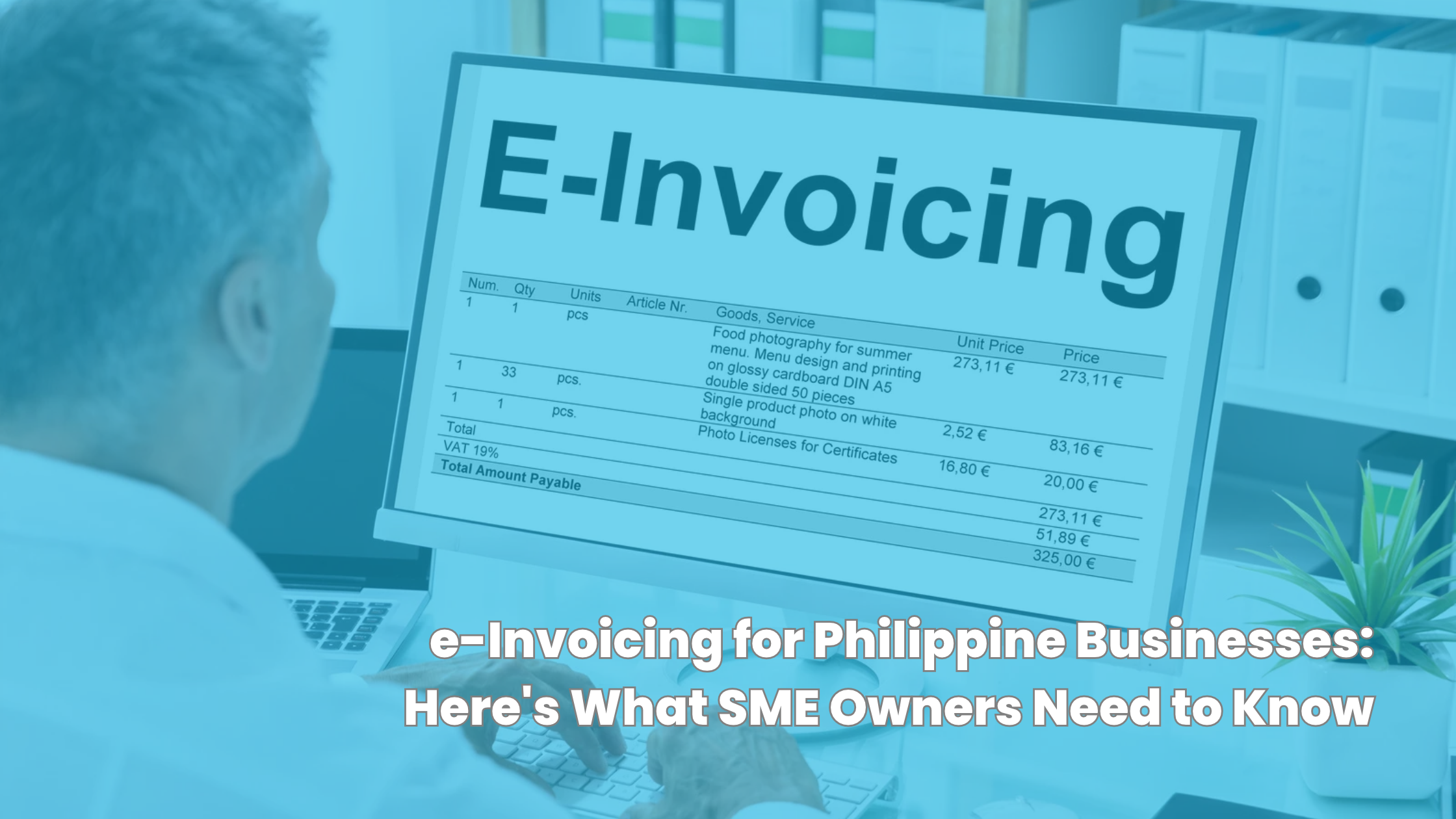
If you run a small or medium business in the Philippines, your calendar already has a lot on it: payroll cutoffs, SSS, PhilHealth and Pag-IBIG remittances, BIR filings, and soon the 13th month pay. Now, there is one more date to watch: December 31, 2026, the deadline for covered taxpayers to start issuing electronic invoices.
The date is closer than it feels, and the rules are only a few weeks old. Here is a plain-language walkthrough.
What Changed?
On September 22, 2026, the Bureau of Internal Revenue (BIR) issued Revenue Memorandum Circular (RMC) No. 98-2026, the detailed guidelines for e-invoicing. It implements earlier regulations (RR Nos. 8-2022 and 11-2025, as amended by RR No. 26-2025), according to the BIR's own press release. The agency says its goal is to make e-invoicing workable for taxpayers while strengthening the foundation for a digital tax administration.
The deadline is not new. As PwC Philippines points out, the mandate was announced in early 2025 with a March 2026 target, then extended to December 31, 2026. What’s new is that the detailed operating rules have only just arrived.
Is Your Business Covered?
Not every business is covered. The mandatory group includes:
- Small, medium and large taxpayers engaged in e-commerce or internet transactions
- Taxpayers under the Large Taxpayers Service
- Large taxpayers under the Ease of Paying Taxes framework (PHP1 billion in gross sales and above)
- Taxpayers using computerized accounting systems, computerized books of accounts with e-invoicing, or other invoicing software
- Others the Commissioner may require
Micro taxpayers are exempt from the mandate. Businesses outside the mandatory group may adopt e-invoicing voluntarily, but they need a Permit to Issue first. Check your BIR classification and ask your accountant how the circular applies to you if you’re unsure where you fall.
"But we already email PDF invoices..."
Unfortunately, that doesn’t count. Under the circular:
- Invoices made by hand in Word, Excel, Google Docs or Google Sheets are not valid e-invoices.
- A printout or PDF is not enough if the system behind it cannot electronically issue the invoice to the buyer and report the sales data.
- A valid e-invoice comes from a registered, approved, or accredited system, in a structured electronic format, with data the BIR can extract and process.
In short, it’s the system used that matters, not the file you send.
The Two Approvals to Plan for
- Permit to Issue (PTI) Electronic Invoice. This is required before you issue e-invoices, the application of which is evaluated by the BIR within 20 working days.
- Electronic Invoicing and Sales Reporting (EIS) Certification. This is required within six months of your PTI. Missing it can lead to the PTI being revoked.
Two clarifications keep the picture simple:
- The December 31 deadline is about issuing e-invoices. Sending sales data to the BIR is a separate obligation with its own rules still to come.
- If your system goes down, a BIR-authorized manual invoice can be used and later replaced by an e-invoice.
The Honest Challenge: Guidance is Still Catching Up
Some real concerns about this policy are the tight timing, no accredited Electronic Invoicing Service Providers (ESP’s) yet, open technical questions, and no specific PTI application guidance. To date, the BIR has not endorsed any private ESP. Some of these gaps may close soon, and the BIR has kept the date so far. The smart move is to prepare now and watch for updates.
A Practical Checklist for Philippine SME’s
- Confirm coverage with your accountant or tax adviser.
- Ask your invoicing or accounting vendor whether they can issue structured e-invoices and support the BIR's requirements. Their answer will shape your timeline.
- Gather your documents early so you can apply for the PTI as soon as the guidance allows.
- Write a downtime plan for how you would issue manual invoices and replace them later.
- Protect your year-end calendar. December is already packed with 13th month pay and annual closing, so schedule your e-invoicing work now.
- Monitor bir.gov.ph for new issuances.
Keep Payroll Compliance Off Your Plate
e-Invoicing will compete for time with everything else that makes year-end busy, especially payroll. That is where we can help. trellis.ph is a Philippine-built HR and payroll platform that handles payroll processing, attendance, leave management and statutory compliance (SSS, PhilHealth, Pag-IBIG, and BIR), so your team can focus on getting invoicing ready.
Disclaimer: This article is for general information only and is not tax or legal advice. Trellis PH does not currently offer e-invoicing as described here. Please verify requirements against RMC No. 98-2026 and later BIR issuances, and consult a qualified tax professional.
Ready to go digital?
Let trellis.ph be your companion in your transition from manual to automated processes.